
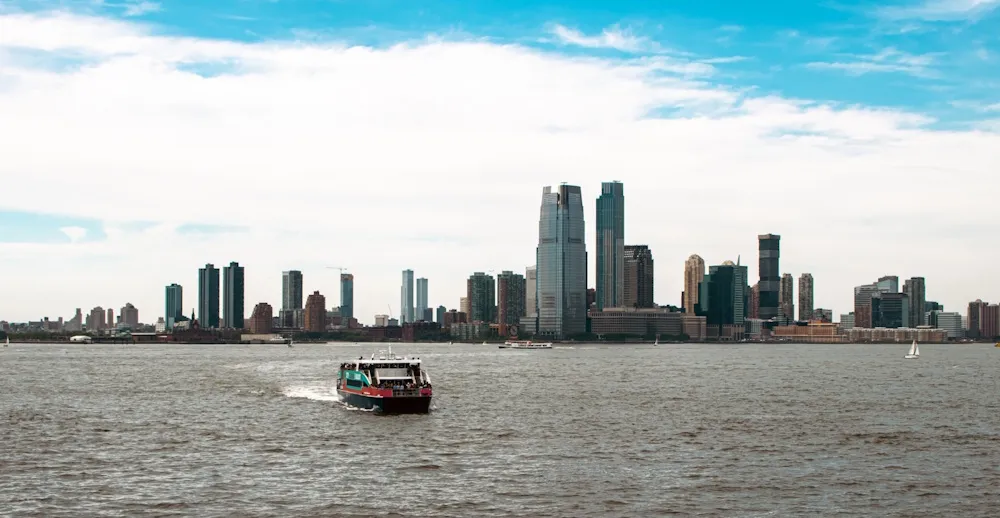
NEW YORK — Organizers of a high-profile Independence Day celebration in New York Harbor swiftly removed a participating vessel on July 4, 2026, after it displayed banners with explicit political messaging, sparking immediate debate over free expression, event protocols, and the boundaries of patriotic gatherings. The incident unfolded amid nationwide festivities marking America’s 250th anniversary, where communities balanced celebration with contemporary tensions.
The vessel, part of a traditional harbor parade featuring tall ships, classic boats, and maritime tributes, drew attention when observers spotted banners referencing political figures and hot-button issues. Witnesses described large signs that appeared to endorse specific viewpoints on immigration, government policy, and ideological battles — content that clashed with the event’s stated non-partisan guidelines. Within minutes of the display becoming prominent, parade officials intervened, directing the boat to exit the formation.
Event coordinators emphasized that the removal was not about suppressing speech but maintaining the spirit of a unified national holiday. “This parade is about honoring our shared history and the men and women who serve at sea,” one organizer told local reporters on scene. “We welcome diverse participants, but the focus remains on commemoration, not campaigning.” The decision came after repeated warnings, according to sources familiar with the planning, as organizers had circulated clear rules prohibiting partisan materials to keep the atmosphere inclusive for families and veterans.
The vessel’s owner, who has not been publicly identified in initial reports, reportedly argued that the banners reflected personal views aligned with broader American values of liberty and dissent. Supporters gathered on social media and nearby docks, framing the removal as heavy-handed censorship during a day meant to celebrate freedom. “On Independence Day, of all days, we should tolerate robust debate,” one commenter posted, echoing sentiments from those who saw the action as inconsistent with constitutional principles.
Critics of the display, including some parade participants and attendees, countered that private events have the right to set standards. “This wasn’t a public square; it was a curated celebration with sponsors and families watching,” said a longtime sailor involved in similar events. “Turning boats into floating billboards distracts from remembering why we gather — the sacrifices that secured our independence.” Videos circulating online captured the moment the vessel peeled away, with mixed reactions from the shoreline crowds. Some cheered the enforcement, while others voiced disappointment at what they viewed as an overreaction.
The episode highlights deeper fault lines in how Americans mark national holidays in polarized times. Independence Day 2026, amplified by the 250th milestone, featured speeches, fireworks, and parades across the country, including high-visibility events in New York Harbor near landmarks like the Statue of Liberty. President Trump’s earlier remarks during anniversary celebrations had already steered conversations toward themes of national identity and ideological threats, providing context for why political expressions feel particularly charged this year.
Maritime experts noted that harbor parades operate under logistical and safety constraints, with vessels coordinated closely by the Coast Guard and local authorities. Introducing unexpected elements like large banners can complicate navigation and crowd focus, especially in busy waterways. Organizers defended their swift response as necessary to avoid derailing the entire program, pointing to past incidents where similar distractions led to complaints from participants.
For many New Yorkers and visitors lining the shores or watching broadcasts, the day retained its magic. Fireworks exploded over the water later that evening, illuminating the skyline and drawing cheers that momentarily overshadowed the controversy. Families shared stories of relatives who served in the Navy or Merchant Marine, reinforcing the holiday’s core purpose. Yet the vessel incident lingered in conversations, prompting reflections on where personal advocacy ends and collective commemoration begins.
Legal observers suggested the matter is unlikely to escalate into a major court battle, as privately organized events enjoy latitude in setting content rules, distinct from government censorship claims. Still, it fuels ongoing debates about public spaces, sponsorships, and cultural expression. Advocacy groups on both sides weighed in quickly: one emphasizing free speech protections, another stressing respect for neutral civic rituals.
In the broader picture, this relatively small disruption mirrors larger questions facing the nation at its 250-year mark. How do citizens with strongly held views participate in shared traditions without fracturing them? New York Harbor, a historic gateway symbolizing welcome and opportunity, became an unintended stage for that tension. The removed vessel ultimately docked without further incident, its crew citing principle over participation.