
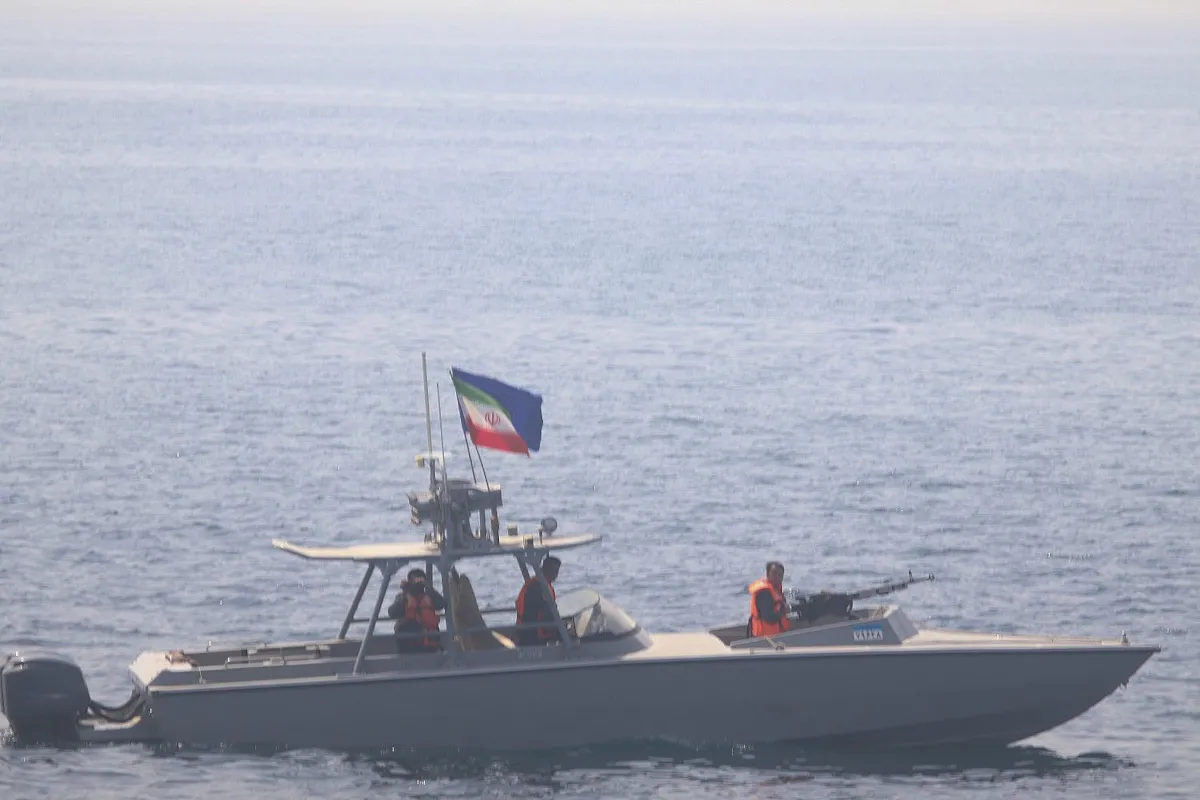
The Trump administration on Tuesday revoked a sanctions waiver that had authorized Iranian oil sales, moving swiftly to reimpose economic pressure on Tehran after Iran’s Islamic Revolutionary Guard Corps attacked three commercial vessels in the Strait of Hormuz.
The Treasury Department’s Office of Foreign Assets Control replaced General License X — issued on June 21 as part of the Islamabad Memorandum of Understanding signed on June 18 — with a narrower General License X1 that permits only wind-down transactions through 12:01 a.m. EDT on July 17. The original license had authorized Iranian crude oil, petrochemical, and petroleum product sales through August 21. Under the new license, no new purchases or loading of Iranian oil are permitted after July 7, and any payments to blocked persons must be deposited into interest-bearing blocked accounts in the United States.
Attacks That Triggered the Response
The revocation followed a rapid escalation in the Strait of Hormuz. On Monday night, Iran’s Revolutionary Guards fired at least two missiles at commercial ships transiting the waterway, according to Axios, citing two U.S. officials. The United Kingdom Maritime Trade Operations reported that a tanker caught fire after being struck by an “unknown projectile” while traveling south near Oman.
CNN reported that Iran attacked a total of three commercial vessels within Oman’s territorial waters, with a U.S. official characterizing the strikes as a breach of the memorandum of understanding. Among the ships hit was a Qatari-flagged liquefied natural gas tanker, the al-Rakiyat, according to Reuters and Qatar’s Foreign Ministry. A Saudi-flagged crude oil tanker was also damaged. No casualties were reported.
A U.S. official called the attacks “wholly unacceptable,” warning that Iran would face consequences. U.S. Central Command subsequently launched what it described as “powerful strikes” against Iranian military installations on the country’s southern coast.
Iran Condemns the Move
Iran’s Ministry of Foreign Affairs on Wednesday condemned the sanctions revocation as a “clear violation” of Article 10 of the Islamabad MoU, which committed the U.S. Treasury to issue waivers for Iranian oil exports immediately upon signing and until sanctions are fully lifted. The ministry said it held “the US government responsible for the consequences of this breach of promise” and vowed to take any measures necessary to safeguard its national security.
The June 18 MoU, signed by President Trump and Iranian President Masoud Pezeshkian with Pakistani mediation, had established a framework for ending hostilities, reopening the Strait of Hormuz, and beginning nuclear negotiations within 60 days. Under Article 5, Iran committed to facilitating safe passage for commercial vessels through the strait. U.S. officials have framed the sanctions revocation as reflecting the “performance-based” nature of the agreement, effectively linking continued economic relief to Iranian compliance.